


Designing a patio in Denton, TX, or anywhere across Dallas-Fort Worth is fundamentally different from designing a patio in most other parts of the country. North Texas’s climate is extreme by almost any measure: summer temperatures that routinely exceed 100°F, UV intensity that bleaches and degrades inferior materials within a single season, spring storms that drop inches of rain in hours, expansive clay soil that shifts with every wet-dry cycle, and occasional hailstorms that can destroy unprotected outdoor structures.
A patio that doesn’t account for these realities isn’t just uncomfortable, it’s a short lived investment. The best patio designs for DFW homeowners treat Texas heat and weather not as obstacles to work around, but as design parameters to engineer around from the very first sketch. This guide breaks down exactly how.
This is a cluster article from our ultimate guide to luxury outdoor living in North Texas. For patio pricing, see our patio cost guide for Dallas-Fort Worth. To explore our patio work, visit our luxury patio construction service page.
Understanding DFW’s Climate Before You Design a Single Square Foot
Most patio design content focuses on aesthetic layout, furniture, plants, and lighting. In North Texas, aesthetics are secondary to climate engineering. You can have the most beautiful patio in Frisco, but if it doesn’t address these four specific DFW realities, you won’t use it for five months of the year:
🌡️ The Four Climate Realities Every DFW Patio Must Be Designed Around
1. HEAT: June-September averages above 95°F daily. Dark patio surfaces reach 140°F+ in direct sun, literally painful to walk on barefoot and too hot to sit near.
2. UV INTENSITY: DFW’s sun angle and clear sky frequency bleach, crack, and degrade poorly specified materials 2-3x faster than northern climates.
3. STORM SEASON: Spring storms bring 50+ mph winds, hail up to baseball size, and 2-4″ of rain in a single event. Unprotected structures and improper drainage fail fast.
4. CLAY SOIL MOVEMENT: North Texas’s expansive clay shrinks 2-4″ in drought and swells when wet any rigid surface without a proper engineered base will crack and shift within years.
The good news: all four of these challenges have well-established design solutions. The patios that fail in DFW aren’t bad ideas; they’re good ideas executed without North Texas-specific engineering. Here’s what the right design looks like:
8 Patio Design Features That Work in Texas Heat and Why
This table reflects what we actually specify on every job near Fort Worth, Dallas, and Denton when a client asks us to build a patio that performs year-round. Every feature here was learned either by building it right – or by watching someone else build it wrong:
| Design Feature | Why It Matters in Texas | The Job Hog Recommendation |
|---|---|---|
| Overhead Shade Structure | Reduces surface temp by up to 30°F; makes June-Aug usable | Louvered aluminum pergola – adjustable sun/shade/rain control |
| Heat-Resistant Surface Material | Dark concrete reaches 140°F+ in direct sun; correct material stays walkable | Travertine or light-toned pavers – naturally cooler underfoot |
| Engineered Drainage System | DFW’s spring storms dump 2-4″ in hours; pooling destroys base systems | Channel drains + French drains graded away from foundation |
| Outdoor Ceiling Fans | Moves air across the patio; perceived cooling of 8-10°F | Pre-wired fan points in pergola or covered structure frame |
| Misting System Rough-In | Evaporative cooling drops ambient temp 10-20°F on dry Texas days | Pre-plumb supply line during construction – retrofit is costly |
| Native Plant Shade Buffer | Strategic tree/shrub placement provides natural shade without root damage | Texas live oak, cedar elm, or desert willow positioned at 15-20 ft |
| East or North Orientation | East-facing patios avoid brutal afternoon west sun from 2-7 PM | Orient primary living zone toward east or northeast when possible |
| Light Surface Colors | Light stone reflects heat; dark surfaces absorb and radiate it back | Orient the primary living zone toward the east or northeast when possible |
* Recommendations based on 17+ years of outdoor living construction in the DFW area. All design features above are most effective when planned before construction begins. Retrofit costs are 2-3x higher.
Shade Engineering: The Single Most Important Patio Design Decision in DFW
If you take nothing else from this guide, take this: a patio without engineered shade in North Texas is a patio you will not use from Memorial Day through Labor Day. That’s four of your twelve months and the four months with the longest days. Shade isn’t an accessory in DFW outdoor living design. It’s infrastructure.
Louvered Pergola Systems: The DFW Gold Standard
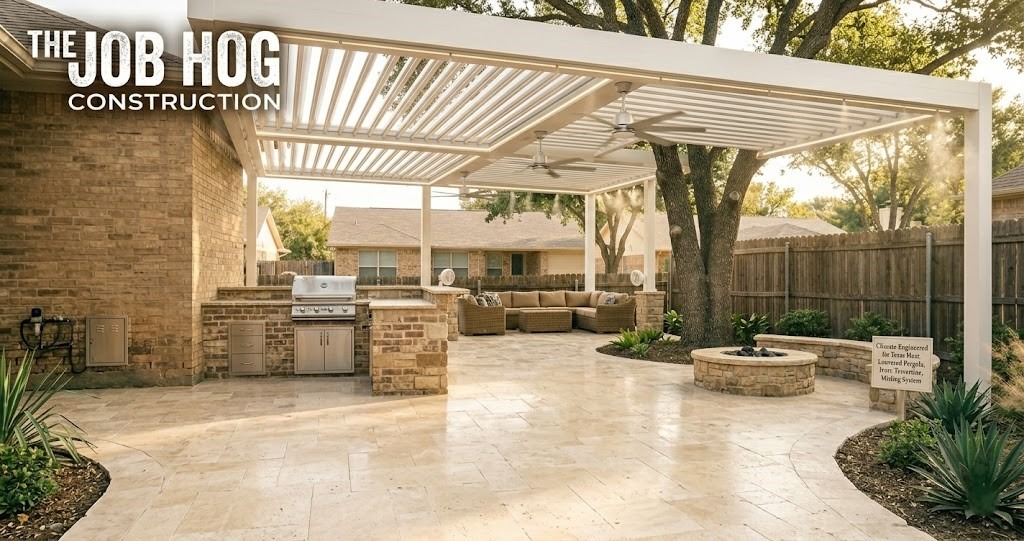
A motorized louvered aluminum pergola is currently the most effective shade solution for North Texas patios. Unlike fixed roof pergolas that block all light or open slat pergolas that provide minimal shade, louvered systems let homeowners adjust sun and shade throughout the day, open in the morning for light, angled midday to block the worst of the afternoon sun, and closed fully when spring storms roll in. The adjustment is typically remote-controlled, and premium systems include weather sensors that auto-close when rain or wind is detected.
From a design standpoint, the pergola frame should be integrated with the patio layout from day one, not added after. Pergola post placement determines furniture arrangement, and pre-wiring for fans, lighting, and misting supply lines must happen before the patio surface is installed.
Covered Patio Additions to the Home
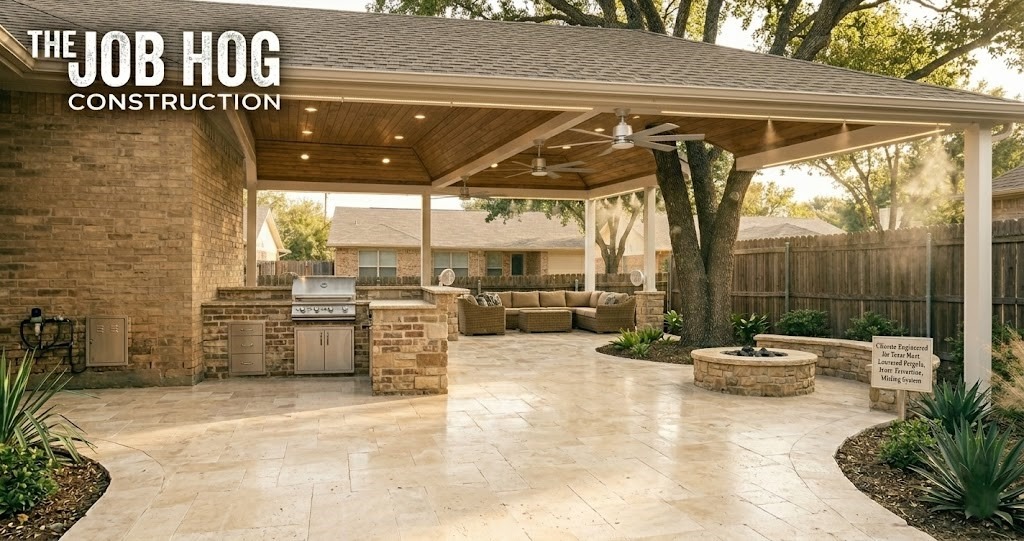
For homeowners who want maximum weather protection, extending the home’s roofline to create a true covered patio is the most robust option. A covered patio with a solid roof matching the home’s existing roofing material completely protects from rain and hail, allows ceiling fan installation without concerns about waterproofing, and provides the most comfortable year round outdoor living environment. It’s the highest cost option, but also the longest lasting and most usable across all DFW seasons.
Strategic Shade Tree Placement
For homeowners who prefer a more natural shade approach, large canopy trees placed strategically to the west and southwest can significantly reduce afternoon sun exposure on the primary patio area. Texas live oaks, cedar elms, and desert willows are the best performers in DFW native, drought tolerant, and provide dense summer canopies. The critical rule: keep tree trunks at least 15-20 feet from paved surfaces to prevent root intrusion under the aggregate base over time.
Surface Materials: What Stays Cool Underfoot in Texas Summer
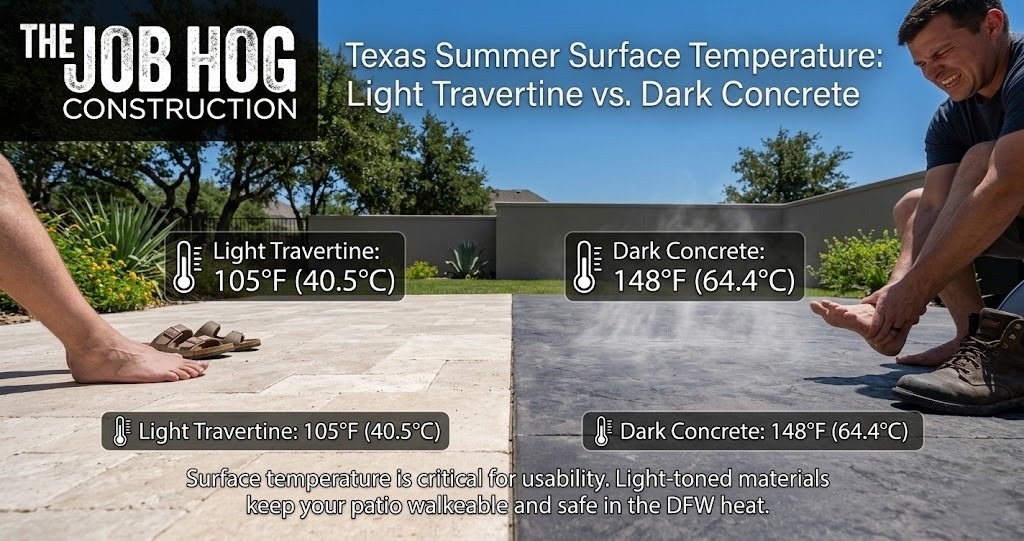
Surface temperature is a practical reality that most patio material guides don’t address. In direct Texas sun at 100°F, different patio materials reach dramatically different surface temperatures, the difference between a surface you can walk barefoot on and one that causes burns in seconds.
Travertine: The Coolest Natural Patio Surface in DFW
Travertine’s natural porosity and light reflective color make it the coolest feeling patio surface in direct Texas sun. Genuine travertine has been measured 20-30°F cooler than comparably colored concrete in identical sun exposure conditions. Its buff to ivory tones also reflect rather than absorb solar radiation, keeping the ambient temperature around the patio measurably lower. For pool surrounds and primary entertaining areas where barefoot traffic is common, travertine is consistently our first recommendation for DFW homeowners.
Light Toned Porcelain and Concrete Pavers
Light colored porcelain and premium concrete pavers, ivory, buff, and light grey perform well thermally in Texas heat. The key is color, not material: any light-toned surface reflects more solar radiation than it absorbs. Dark-toned pavers, despite being stylish in showrooms, absorb heat aggressively and radiate it back as ambient warmth around the patio well into the evening.
What to Avoid in the Direct Texas Sun
- Dark grey or charcoal pavers or concrete surface temperatures can exceed 150°F in July
- Black decorative aggregate in concrete absorbs and holds heat intensely
- Exposed aggregate concrete with dark stone looks great in showrooms, unbearable in July
- Unshaded wood decking warps, fades, and splinters rapidly in DFW’s UV intensity
Drainage Design: The Unglamorous Detail That Determines Long-Term Success
Drainage is the least glamorous patio design topic and the most consequential one in North Texas. DFW’s spring storm season delivers rainfall at intensities that overwhelm improperly designed outdoor surfaces, and the results of inadequate drainage are serious: water migrating against the home’s foundation, aggregate base erosion that causes paver settling and cracking, and standing water zones that make the patio unusable for days after rain.
Surface Slope: The Foundation of All Drainage
Every patio surface in North Texas must slope away from the home at a minimum of 1/4 inch per foot. This sounds simple, but is frequently compromised when contractors prioritize visual levelness over proper drainage grade. On an 18-foot deep patio, a proper 1/4″ slope moves water 4.5 inches lower at the outer edge, a difference that’s barely visible but functionally critical.
Channel Drains and French Drains
On larger patios, slope alone isn’t sufficient to handle DFW’s peak storm rainfall. Linear channel drains installed across the patio’s low edge capture surface water and direct it to a buried drain line. French drains in the aggregate base manage sub surface moisture from DFW’s clay soil. Both should be planned in the design phase. Retrofitting drainage after a patio is installed costs 2-3 times more than including it from the start.
Designing for All Four DFW Seasons, Not Just Summer
The best patio designs for DFW homeowners don’t just address summer heat; they create a space that’s genuinely usable across North Texas’s full seasonal range. Here’s how each season shapes design decisions:
| Season | DFW Conditions | Patio Challenge | Design Solution |
|---|---|---|---|
| Spring(Mar-May) | 70-85°F, heavy rain, hail | Standing water, hail damage risk | Channel drains, impact-resistant materials, no glass overhead |
| Summer(Jun-Sep) | 95-105°F+, UV intense | Too hot to use 10 AM-6 PM | Louvered pergola, misting, ceiling fans, cool surface materials |
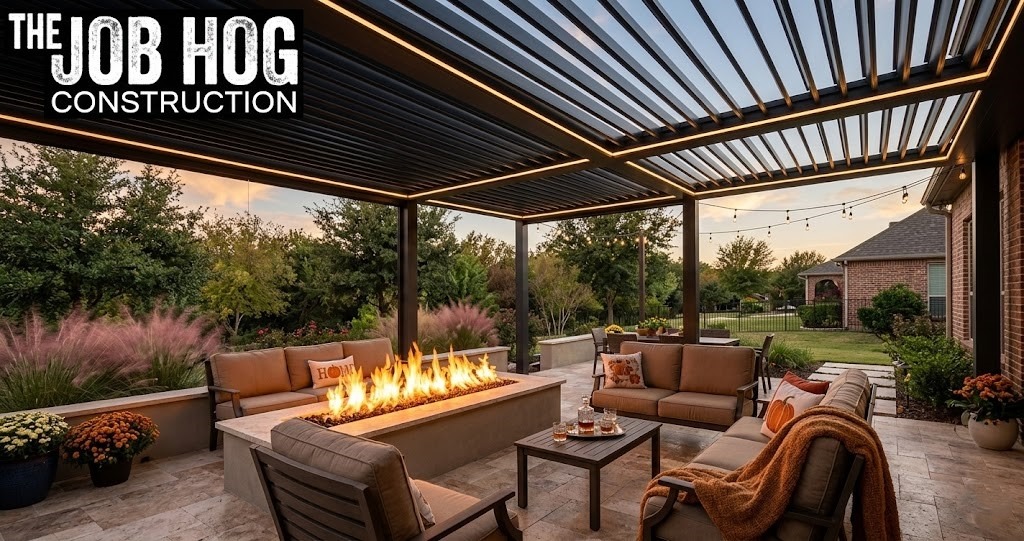
| Fall(Oct-Nov) | 55-75°F, ideal weather | No challenge – prime outdoor season | Fire feature to extend evenings, outdoor kitchen, ambient lighting |
| Winter(Dec-Feb) | 35-60°F, occasional ice | Cool mornings, underused space | Outdoor fireplace/fire pit, heater rough in, covered structure |
* A well-designed North Texas patio is genuinely usable 10 months per year. The two hardest months are mid-July and mid-August – but even those become manageable with proper shade, airflow, and misting.
The design implication: build in flexibility. A louvered pergola handles both summer shade and rain protection. A gas fire feature makes fall and winter evenings genuinely inviting. Pre-wired outdoor heater points extend cold morning usability. These aren’t luxury add-ons, they’re the features that transform a patio from a summer only space into a genuine year round outdoor living room.
The DFW Patio Design Checklist: Before You Build
Before breaking ground on any patio project in North Texas, confirm these design elements have been addressed. If a contractor’s proposal doesn’t account for all of them, ask why:
- Shade structure specified and structurally integrated, not left as a future add-on
- Surface material selected for light color and heat reflectivity, not just aesthetics
- Patio orientation reviewed relative to the afternoon sun path (west/southwest exposure)
- Drainage plan documented slope grade, channel drain, or French drain locations
- Base specification confirmed minimum 4-6″ compacted aggregate for DFW clay soil
- Fan and misting rough in locations planned and wired before surface install
- Fire feature or heater rough-in included if year-round use is a priority
- All overhead structure rated for DFW hail and wind loads
💡 The Most Common Patio Design Mistake in DFW
Designing the shade structure as an afterthought. We see it constantly on a beautifully installed patio with no overhead shade, and the homeowner calls six months later asking about adding a pergola. The result: additional cost, compromised aesthetics (post placement isn’t ideal), and in many cases, tearing up paver sections to run electrical or plumbing that should have been installed before the surface went down. Plan your shade from day one.