
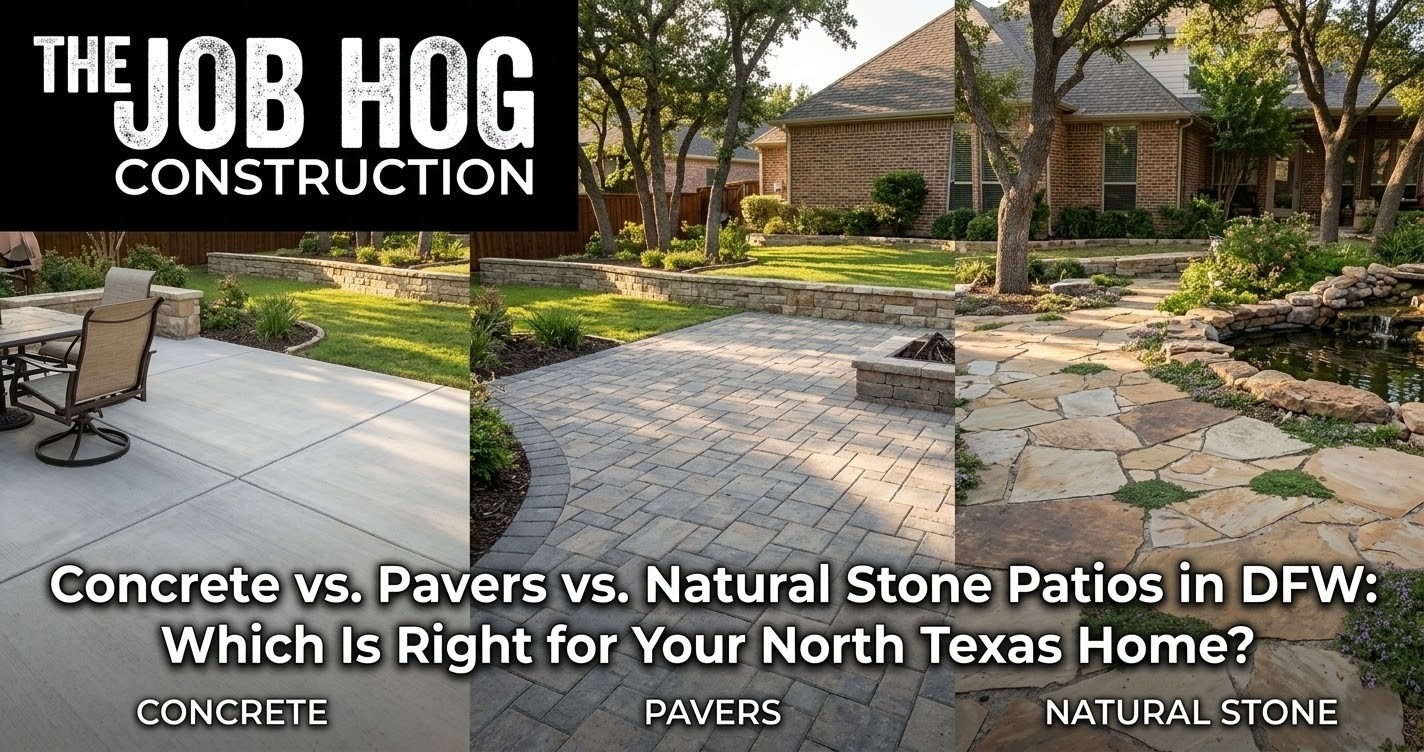

Choosing the right patio material is the single most important decision in any DFW outdoor living project, and it’s also the one where homeowners are most often given bad advice. Generic home improvement content recommends concrete as the budget choice and stone as the premium option, without ever accounting for what North Texas’s expansive clay soil, 100°F+ summers, and intense UV exposure actually do to each material over time.
This guide compares concrete, pavers, and natural stone patios in DFW across every dimension that actually matters for a North Texas homeowner: cost, durability in Texas conditions, maintenance requirements, repairability, and return on investment. By the end, you’ll know exactly which material fits your backyard, your budget, and your goals.
This is a cluster article from our ultimate guide to luxury outdoor living in North Texas. For full patio pricing, see our dedicated patio cost guide for Dallas-Fort Worth. To see our patio work, visit our luxury patio construction service page.
Full Side-by-Side Comparison: Concrete vs. Pavers vs. Natural Stone in North Texas
Before diving into each material individually, here’s the complete head-to-head. Red rows highlight where concrete specifically underperforms in DFW conditions. Green rows show clear material advantages:
| Category | Concrete | Pavers | Natural Stone |
|---|---|---|---|
| Cost per Sq Ft | $6 – $20 | $14 – $28 | $25 – $50+ |
| 400 Sq Ft Installed | $2,400 – $8,000 | $5,600 – $11,200 | $10,000 – $20,000+ |
| Texas Heat Performance | Cracks over time | Excellent | Excellent |
| Clay Soil Tolerance | Poor cracks | Good flexes | Good flexes |
| Maintenance Required | Seal every 2-3 yrs | Minimal | Occasional sealing |
| Repairability | Difficult / costly | Easy replace individual pieces | Moderate |
| UV Fade Resistance | Moderate | Good | Excellent |
| Slip Resistance | Moderate | Good | Good textured |
| Aesthetic Range | Limited | Wide | Premium / unique |
| Lifespan in DFW | 10-20 years | 25-40+ years | 30-50+ years |
| Best For | Budget/utility | Mid luxury range | Luxury/premium |
* Red rows = areas where concrete underperforms in North Texas conditions, specifically. Green rows = clear winners. 2026 DFW market pricing.
Concrete Patios in DFW: What You Need to Know
Concrete is the most affordable patio material and the most commonly installed across the country. But in North Texas specifically, concrete has a performance problem that most contractors won’t tell you upfront: DFW’s expansive clay soil is one of the worst possible substrates for poured concrete slabs.
The Clay Soil Problem
North Texas’s black clay soil, locally called “black gumbo,” shrinks dramatically during dry periods and swells when it absorbs moisture. A standard concrete slab poured over this soil will begin showing hairline cracks within 2-3 years and visible structural cracks within 5-7 years, even with proper rebar reinforcement. This isn’t a contractor quality issue; it’s a physics issue. Rigid concrete can’t flex with soil that moves seasonally by inches.
When Concrete Does Make Sense in DFW
We’re not saying use concrete in North Texas, but we’re specific about where it works:
- Covered patios that are shielded from direct rain saturation and temperature extremes
- Utility areas like driveways, garage aprons, and side yard paths, where aesthetics are secondary
- Budget projects with a 5-10 year expectation, not a long-term investment mindset
- Stamped concrete in covered outdoor rooms where soil movement is less severe
Stamped concrete is worth a specific note: it gives a decorative look at a lower cost than pavers, but it inherits all of concrete’s clay soil problems and also requires sealing every 2-3 years in Texas’s UV intensity to maintain its appearance. For primary outdoor living patios, we generally don’t recommend it as a long-term solution in DFW.
⚠️ The Real Cost of Cheap Concrete in North Texas
A basic concrete patio costs $2,400-$8,000 installed. When it cracks and needs replacement in 5-8 years, the removal and disposal alone runs $1,500-$3,000 plus the full cost of the replacement material. Many DFW homeowners spend more on the second patio than they would have on quality pavers or stone the first time.
Paver Patios in DFW: The Best All Around Choice for Most Homeowners
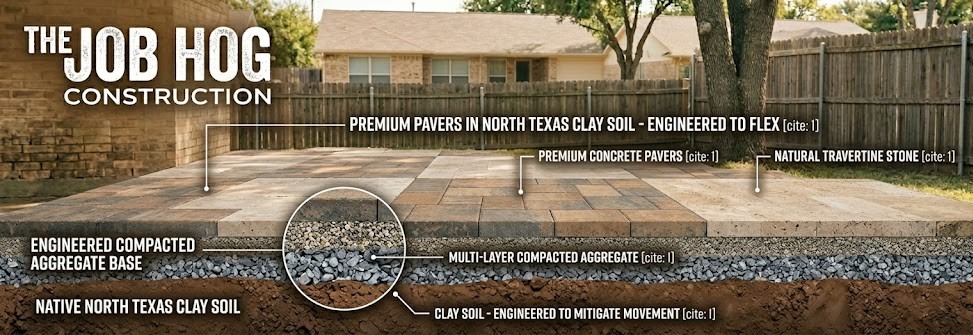
Concrete pavers, whether manufactured concrete, travertine, limestone, or porcelain, are our most commonly recommended patio material for North Texas homeowners, and for good reason. They solve concrete’s fundamental problem in DFW: because individual pavers are not monolithically connected, they can flex slightly with soil movement without cracking. When one paver shifts or settles, it can be reset or replaced individually, not a full slab demolition.
Concrete Pavers: Durability at a Mid-Range Price
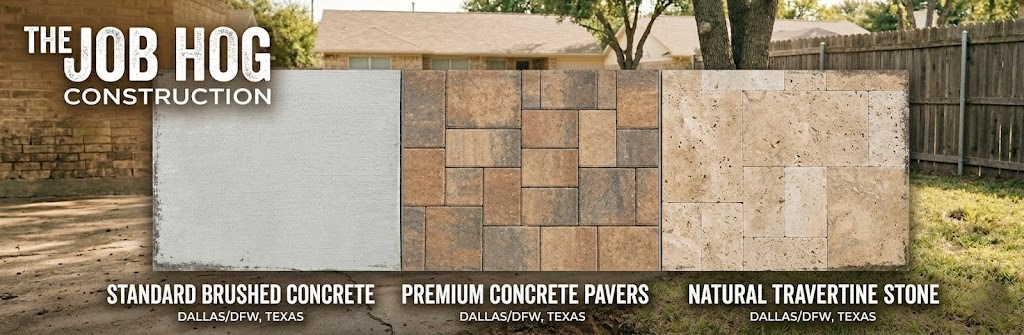
High-quality manufactured concrete pavers are the most practical choice for homeowners in the $8,000-$15,000 budget range. Modern concrete pavers come in a wide range of colors, textures, and sizes, many authentically replicating natural stone at a lower cost. They’re dimensionally consistent (easier to install with tight joints), widely available through DFW suppliers, and backed by manufacturers with 25 year warranties when properly installed.
Travertine Pavers: The Premium Performer in Texas Heat
Travertine is natural limestone with a distinctive porous texture that gives it one significant advantage over most patio materials in DFW summers: it stays noticeably cooler underfoot in direct Texas sun compared to concrete or porcelain. Its natural variation means no two travertine patios look identical, and its warm buff to ivory tones complement the majority of North Texas architectural styles from traditional to contemporary. Travertine does require occasional sealing to prevent staining, but otherwise is extremely low maintenance.
Porcelain Pavers: The Modern, Zero Maintenance Option
Large format porcelain pavers have become increasingly popular in DFW’s luxury outdoor living market for homeowners who want a contemporary, seamless aesthetic. Porcelain is completely non-porous; it won’t stain, won’t absorb moisture, and requires no sealing. The tradeoff is that it can be slippery when wet if a textured finish isn’t specified, and it requires a perfectly flat, engineered base to prevent rocking on uneven surfaces.
Natural Stone Patios in DFW: The Luxury Benchmark
Natural stone limestone, flagstone, slate, and quartzite represent the premium tier of patio materials in North Texas, and for good reason. No manufactured product fully replicates the visual depth, natural variation, and character of genuine stone. In a DFW real estate market where outdoor living spaces significantly influence resale value, natural stone is the material that makes buyers stop and take notice.
Limestone: The Texas Classic
Texas limestone is locally quarried, architecturally familiar, and visually suited to everything from Hill Country ranch-style homes to contemporary Frisco new builds. It’s naturally textured for slip resistance, thermally stable, and weathers gracefully over decades. It does require periodic sealing, particularly in areas exposed to food and drink in outdoor kitchen settings, but that’s a minor maintenance commitment for a material that can last 50+ years in DFW conditions.
Flagstone: Organic Character, Premium Price
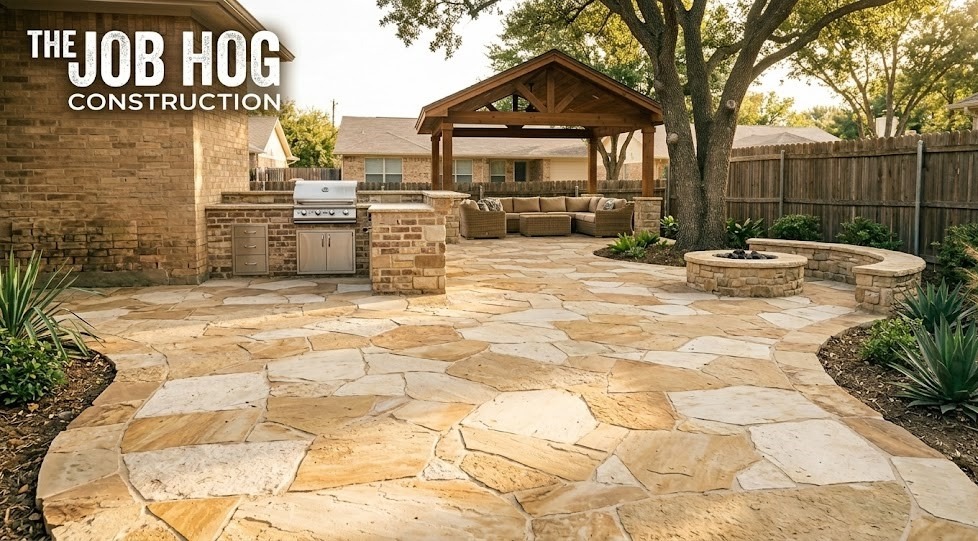
Flagstone’s irregular shapes and natural color variation create an organic, one-of-a-kind aesthetic that no manufactured material can duplicate. The installation labor is significantly higher; cutting, fitting, and setting irregular pieces requires skilled craftsmanship, which pushes the total project cost to the upper range of the stone category. For homeowners who want a truly distinctive outdoor living space, it’s worth every dollar.
Which Patio Material Should You Choose? The DFW Decision Guide
The right material depends on your budget, your timeline, how you use the space, and your long-term goals for the property. Use this scorecard to find your answer:
| You Should Choose… | Concrete | Pavers | Natural Stone |
|---|---|---|---|
| Budget is tight ($5K or less) | ✅ Best fit | ⚠️ Stretch | ❌ Out of range |
| Mid-range budget ($8K-$15K) | ✅ Viable | ✅ Best fit | ⚠️ Entry-level only |
| Luxury budget ($15K+) | ❌ Overkill | ✅ Great fit | ✅ Best fit |
| High traffic family patio | ⚠️ Will crack | ✅ Best fit | ✅ Excellent |
| Pool surround | ❌ Slippery | ✅ Best fit | ✅ Best fit |
| You want zero maintenance | ❌ Needs seal | ✅ Best fit | ⚠️ Occasional seal |
| Maximum resale value | ❌ Minimal | ✅ Good ROI | ✅ Best ROI |
| Covered/shaded area | ✅ Fine here | ✅ Fine here | ✅ Fine here |
✅ = Recommended ⚠️ = Possible with caveats ❌ = Not recommended for this scenario in North Texas
The short version: concrete is only the right choice for covered utility areas and tight budgets with a short time horizon. Pavers are the right choice for most DFW homeowners; they solve the clay soil problem, offer excellent design flexibility, and deliver outstanding longevity at a reasonable cost. Natural stone is the right choice when you want the absolute best maximum curb appeal, maximum resale impact, and a material that genuinely improves with age.
Why Installation Quality Matters as Much as Material in North Texas
Even the best patio material will fail prematurely in DFW if it’s installed incorrectly. The most common installation failure in North Texas is an inadequate base too shallow, improperly compacted, or missing entirely. All three materials require a minimum of 4-6 inches of compacted crushed aggregate base in North Texas clay soil conditions. Without it, even premium travertine or natural limestone will shift, rock, and crack within a few seasons.
Proper drainage engineering is equally critical. DFW receives 37 inches of annual rainfall, often in concentrated spring storms. A patio without planned drainage will pool water against the home’s foundation, erode the aggregate base, and create permanently waterlogged zones. This is non-negotiable regardless of material choice.
The Job Hog engineers every patio with a full base specification and drainage plan before a single paver or stone is placed. It’s one of the most important things that separates long term results from short term fixes in the North Texas market.